


 Nov 07, 2025
 View:1423
Selecting an industrial storage tent requires attention to features that ensure reliable protection and efficiency. Durability stands out as a top priority, with high-denier fabrics and robust frames offering long-term value. Safety and adaptability help industrial warehouse tents meet changing operational demands and safeguard assets. The following table highlights features and benefits commonly found in high-quality industrial tent designs:
| Feature/Benefit | Description |
|---|---|
| Durability | High-denier fabrics (e.g., 300D PU-coated Oxford polyester) are standard for rugged use. |
| Storage Solutions | Extended vestibules and integrated wall pockets enhance functionality. |
| Ease of Use | Pre-attached poles and air-pole systems simplify setup. |
| Sustainability | Recycled materials and biodegradable components are gaining traction. |
| Modularity | Quick-to-install, fire-retardant tents are preferred for events and industrial use. |
| Innovative Features | AI-driven sizing and layout optimization for event planning is emerging. |
A thoughtful checklist helps buyers avoid costly mistakes and maximize their storage investment. Every organization should assess its specific needs and environment before choosing a solution.
Key Takeaways
- Durability is crucial. Choose tents made from high-denier fabrics and strong frames for long-lasting protection.
- Look for weather-resistant features. Ensure tents have waterproof covers and sealed seams to protect stored items from rain and UV damage.
- Consider flexibility. Modular designs allow for easy expansion and reconfiguration to meet changing storage needs.
- Prioritize safety. Select tents that comply with fire safety standards and include secure entry points to protect assets.
- Check for quick assembly options. Tool-free setups can save time and reduce labor costs during installation.
- Evaluate insulation features. Insulated tents help maintain stable temperatures and reduce energy costs.
- Assess site compatibility. Ensure the tent can be securely anchored based on the ground surface and local weather conditions.
- Customization options enhance functionality. Look for features like pre-wired electrical systems and high-performance doors to improve operational efficiency.

Durability of Industrial Storage Tent
Industrial warehouse tents must deliver durability and material quality to withstand demanding environments. The right combination of frame materials, heavy-duty fabrics, and resistance features ensures long-term protection and reliable performance.
Frame Materials
Galvanized Steel
Galvanized steel frames provide strong construction for industrial warehouse tents. This material resists corrosion and supports heavy loads. Steel frames typically last 10-15 years with annual anti-corrosion treatment. Many tents use galvanized connectors to improve joint strength and reduce rust.
Robust Cord Options
Manufacturers often reinforce frames with robust cords or tensioning systems. These components help stabilize the structure during high winds and heavy snow. Proper cord selection increases the overall durability of the tent.
| Frame Material | Average Lifespan | Maintenance Cycle | Recycling Value |
|---|---|---|---|
| Aluminum Frame Tent | 20-30 years | Maintenance-free | >90% material recovery rate |
| Steel Frame Tent | 10-15 years | Annual anti-corrosion | Lower recovery value |
Many industrial warehouse tents feature 6061-T6 aluminum frames with galvanized connectors. This combination offers over 15 years of reliable service and high recycling value.
Heavy-Duty Fabrics
Polyethylene Covers
Polyethylene covers offer basic protection against moisture and dust. These fabrics are lightweight and easy to handle. Polyethylene is suitable for short-term or moderate weather conditions.
PVC Covers
PVC covers provide enhanced durability for industrial warehouse tents. The industry standard ranges from 650g to 850g PVC fabric, which is waterproof and UV-resistant. PVC meets DIN4102 B1 flame retardancy standards. This material withstands all weather, including 100km/h winds and 75kg/㎡ snow loads. PVC covers typically last 6-8 years with proper care.
Tip: Always check the fabric weight and certification before purchasing. Heavier PVC fabrics offer better protection and longer lifespan.
UV and Wear Resistance
UV Protection
UV protection is essential for tents exposed to sunlight. UV exposure degrades fabrics over time. Coatings such as titanium dioxide (TiO2) enhance UV resistance and extend the life of the tent, especially in harsh climates.
Tear Resistance
Strong fabrics delay wear and tear caused by wind and UV resistance. Proper storage and maintenance help preserve the tent’s integrity. Managing UV exposure and using TiO2-coated fabrics can significantly improve durability.
- UV exposure reduces the lifespan of tent fabrics.
- Stronger fabrics prolong tent life by resisting tears and degradation.
Industrial warehouse tents installed on cement or industrial yards do not require a foundation. This feature adds flexibility and supports long-term use in various locations.
Weather Protection & Insulation
Industrial warehouse tents must shield stored goods from harsh weather and environmental hazards. Manufacturers design these tents with advanced waterproofing features, mildew resistance, flame retardancy, and insulation options to ensure reliable protection in diverse climates.
Waterproof Features
Seam Sealing
Seam sealing prevents water from entering through stitched areas. Manufacturers use heat-sealed or taped seams to block moisture. This process creates a continuous barrier, which keeps the interior dry during heavy rain.
Rain Protection
Rain protection depends on the tent’s fabric and construction. Polyethylene and PVC covers repel water and resist leaks. Many tents feature RHINOTUFF™ finishes for long-lasting outdoor protection. These finishes enhance waterproofing features and extend the tent’s lifespan.
Note: Proper seam sealing and high-quality covers help maintain weather resistance, even during prolonged storms.
Mildew & Flame Retardancy
Mildew Proofing
Mildew can damage stored items and weaken tent fabrics. Manufacturers add antimicrobial treatments during finishing to stop mold and mildew growth, especially in humid climates. Mildew-resistant tents work well for agricultural storage and tropical environments.
Flame Retardant Materials
Flame retardant treatments slow ignition and reduce burn spread. Industrial tents often meet CPAI-84 and NFPA 701 standards for fire safety. These standards measure flame resistance and vertical flame propagation in textiles. The table below summarizes common treatments and their applications:
| Treatment Type | Purpose | Application Method | Typical Use Cases |
|---|---|---|---|
| Flame Retardant (FR) | Slows ignition and burn spread | Immersion in chemical baths or FR coatings | Welding curtains, stage backdrops, construction barriers |
| Mildew Resistance | Stops mold/mildew growth | Antimicrobial additives during finishing | Agricultural covers, tropical storage |
Tip: Always check for CPAI-84 or NFPA 701 certification when selecting industrial warehouse tents.
Insulation Options
Thermal Liners
Thermal liners improve the tent’s ability to maintain stable indoor temperatures. Common insulation materials such as mineral wool and glass wool can reduce thermal energy losses by 20–40%. Double-layer PVC fabric with an insulation sandwich and thicker rock wool board walls further enhance thermal insulation properties.
Climate Control
Climate control features help regulate temperature and humidity inside the tent. Adding thermal insulation cotton increases moisture protection and reduces energy consumption. These upgrades contribute to energy savings and environmental protection. Industrial tents with excellent heat and UV insulation properties can maintain a comfortable environment, even without air conditioning.
Block Quote: Insulated tents help lower energy costs and carbon emissions, making them a smart choice for sustainable operations.
Size & Space Flexibility
Industrial storage tents offer a flexible solution for organizations with changing requirements. Selecting the right dimensions and layout ensures that the tent meets both current and future storage needs. Companies must consider size and space considerations before making a decision.
Dimensions & Layout
Height, Width, Length
The dimensions of an industrial tent determine its capacity and usability. Manufacturers recommend a minimum span width of 6 meters and a maximum of 50 meters. Eave height typically ranges from 2.5 meters to 5 meters. The length of the tent can be unlimited, allowing for extensive storage or operational space.
| Dimension Type | Minimum | Maximum |
|---|---|---|
| Span Width | 6 m | 50 m |
| Eave Height | 2.5 m | 5 m |
| Length | Unlimited | N/A |
Selecting the right height, width, and length helps organizations optimize their temporary space needs. Taller tents accommodate large equipment, while wider spans support bulk storage.
Modular Design
Modular design enhances flexibility. Industrial tents with modular features can be expanded, reconfigured, and customized on-site. This design adapts to changing climates and operational requirements. Quick assembly and relocation make modular tents a flexible solution for temporary space needs.
- Modular tents allow expansion and reconfiguration.
- They adapt to different climates and operational needs.
- Quick assembly supports temporary or semi-permanent uses.
Expandability
Easy Extension
Organizations often need to expand their storage capacity. The most common methods for extending industrial tents include defining needs, consulting with suppliers, and conducting site surveys. Manufacturers produce components in-house for quality control and short lead times. Delivery and installation occur quickly, minimizing coordination efforts.
- Consult with suppliers and receive a quote.
- Survey the site and prepare for installation.
- Manufacture components for quality and speed.
- Deliver and install the tent on-site.
- Complete fit-out and handover for immediate use.
Future Needs
Planning for future needs ensures that the tent remains a flexible solution. Modular and expandable designs allow organizations to adjust their space as operations grow or change. This approach supports long-term efficiency and cost savings.
Tip: Always consider future expansion when choosing a tent. Modular designs make it easier to adapt to new requirements.
Site Compatibility
Ground Surface
Site compatibility plays a key role in tent selection. Frame tents adapt better to uneven terrain than pole tents, which require a level surface. Temporary flooring solutions, such as plywood or interlocking panels, create a stable base. Raised platforms may be necessary for significant inclines. Anchoring solutions vary by ground type; staking works on firm ground, while weighted ballasts provide stability on rocky or sandy surfaces. Snap-together flooring systems protect against muddy ground and enhance safety. Weather conditions, such as heavy rain and strong winds, require additional securing measures. Local regulations may affect installation, so organizations should check for compliance.
Note: Proper site preparation and anchoring ensure safety and durability, especially for temporary space needs.
Industrial storage tents deliver flexibility and scalability. Organizations benefit from modular designs, easy expansion, and site compatibility, making these tents a reliable and flexible solution for various storage applications.
Setup, Portability & Anchoring
Industrial storage tents offer significant advantages for organizations that require rapid deployment and flexible solutions. Quick assembly and portability features make these tents ideal for temporary storage and temporary facilities, especially when operational needs change frequently.
Quick Assembly
Tool-Free Options
Manufacturers design many industrial tents with tool-free assembly systems. These systems use snap-together frames, pre-attached poles, or air-pole technology. Workers can set up the structure without specialized tools, which reduces labor costs and minimizes errors during installation.
Setup Time
Setup time for industrial storage tents varies by size and complexity. Most tents with quick assembly features can be installed much faster than traditional warehouses.
- Small tents may be ready in a single day.
- Medium-sized tents often require several days.
- Large or complex tents may take up to four weeks.
- This rapid installation allows businesses to respond quickly to increased space demands or emergency situations.
Tip: Fast setup helps organizations minimize downtime and start using new space almost immediately.
Portability Features
Relocation Ease
Portability remains a key benefit of industrial storage tents. Lightweight materials such as aluminum and galvanized steel balance strength with mobility. Modular structures allow teams to disassemble and reassemble tents at new locations with minimal effort.
Transport Solutions
Manufacturers design tents for easy transportation. Components pack into compact containers or fit onto flatbed trucks, making them suitable for remote or hard-to-reach sites. The table below highlights effective portability features:
| Feature | Description |
|---|---|
| Lightweight Materials | Constructed from aluminum or galvanized steel for easy movement. |
| Modular Structure | Components assemble and disassemble quickly for transport. |
| Ease of Transportation | Packs into containers or onto trucks, ideal for mobile operations. |
Note: Portable tents support dynamic operations and reduce logistical challenges for temporary facilities.
Anchoring Methods
Shipping Container Anchoring
Shipping container anchoring provides a stable base for tents in industrial environments. Teams secure tent frames directly to containers, which adds weight and prevents movement during strong winds. This method works well for sites with existing containers or where ground anchoring is difficult.
Stability Enhancements
Several anchoring methods improve tent stability in high-wind or unstable environments:
- Stakes work well on grassy areas but may not suit hard ground.
- Concrete weights offer excellent stability on paved surfaces.
- Water barrels provide anchoring where staking is not possible, though they may slip in severe weather.
- Sandbags adapt to various surfaces and are easy to transport when empty.
- Concrete cinder blocks are common but may not be heavy enough for large tents.
- Footplates are designed for specific tent models and install easily.
Callout: Always select anchoring methods based on ground conditions and expected weather. Proper anchoring protects assets and ensures safety.
Industrial storage tents deliver quick setup, easy relocation, and reliable anchoring. These features support organizations that need temporary storage or temporary facilities in changing environments.
Customization & Energy Efficiency
High-quality industrial tent customization options help organizations improve operational efficiency and reduce energy costs. Companies often select customizable features to match their workflow, security needs, and branding requirements. These choices support better functionality and long-term savings.
Entry & Access
Door Types
Industrial storage tents in logistics and warehousing often use high-performance garage doors. These doors provide wide openings, usually 14 feet high and 13 feet wide, which allow easy movement of large equipment and vehicles. The leg height reaches 14.5 feet, giving ample clearance for forklifts and trucks. Door systems can be installed on concrete, grass, or asphalt surfaces. This flexibility makes them ideal for temporary warehouses and logistics operations.
| Feature | Description |
|---|---|
| Door Type | High-Performance Garage Doors |
| Door Dimensions | 14' high and 13' wide openings |
| Leg Height | 14.5' for ample clearance |
| Surface Compatibility | Can be installed on concrete, grass, asphalt, etc. |
| Usage | Ideal for temporary warehouses and logistics operations |
Security Features
Security features protect valuable assets inside the tent. Many organizations choose lockable doors, reinforced entry points, and access control systems. These options help prevent unauthorized entry and theft. Some tents include motion sensors and alarm systems for added protection. Companies can also request branded entryways to support corporate identity.
Tip: Security upgrades such as access control and alarms increase safety and reduce risk in busy industrial environments.
Lighting & Electrical
Pre-Wired Options
Lighting and electrical customization options improve visibility and support equipment use. Manufacturers offer pre-wired solutions that simplify installation and reduce setup time. These systems include overhead LED fixtures, emergency lighting, and outlets for machinery. Pre-wired tents help organizations start operations quickly and maintain safe working conditions.
Equipment Compatibility
Industrial tents often require compatibility with specialized equipment. Customization options include heavy-duty electrical circuits, generator hookups, and climate control systems. These upgrades support heating, cooling, and ventilation needs. Companies can add task lighting, power strips, and charging stations to match their workflow.
- Pre-wired electrical systems save time during setup.
- Equipment compatibility supports safe and efficient operations.
- Lighting upgrades improve safety and productivity.
Energy Efficiency
Cost-Effective Solutions
Energy efficiency remains a top priority for many organizations. High-quality industrial tent customization options include insulated walls, reflective roofing, and energy-saving lighting. These features lower utility costs and support sustainable operations. LED lighting and programmable thermostats help reduce energy consumption.
Insulation Benefits
Insulation benefits extend beyond temperature control. Well-insulated tents maintain stable indoor climates, protect stored goods, and reduce heating or cooling expenses. Companies often select double-layer PVC fabrics or thermal liners to improve insulation. These choices support energy savings and enhance comfort for workers.
Note: Energy-efficient customization options help organizations lower costs and meet environmental goals.
Customizable features such as entry systems, lighting, and insulation allow companies to tailor industrial tents for maximum functionality and efficiency. These upgrades support safe, productive, and cost-effective operations.
Safety & Compliance
Industrial storage tents must meet strict safety and compliance standards to protect people and property. Manufacturers design these structures with fire safety, structural stability, and emergency access in mind. Organizations should always verify certifications and emergency requirements before installation.
Fire Safety
Certified Materials
Fire safety remains a top priority for industrial warehouse tents. Certified materials help prevent accidents and ensure compliance with local regulations. Manufacturers use fabrics that meet recognized standards for flame resistance. The table below lists common fire safety certifications for industrial storage tents:
| Certification Standard | Description |
|---|---|
| CPAI-84 | Requires fabrics to withstand exposure to an open flame for 12 seconds, evaluating char length and burning behavior. |
| CPAI-87 | Similar to CPAI-84, focusing on the performance of tent materials under flame exposure. |
| NFPA 701 | Measures flame propagation rate, after-flame duration, and char length, essential for large tents in public or industrial settings. |
Organizations should request documentation for these certifications before purchasing a tent. Certified materials reduce fire risk and support safety compliance.
Structural Standards
Building Code Compliance
Building code compliance ensures that industrial tents meet local and national safety requirements. Manufacturers design tents to withstand wind, snow, and other environmental factors. Structural stability depends on proper engineering and adherence to codes. Local authorities may require permits and inspections before use.
Engineering Docs
Engineering documents provide proof of structural stability. These documents include load calculations, wind ratings, and material specifications. Organizations should review engineering docs to confirm that the tent meets all safety standards. Proper documentation supports insurance claims and regulatory approval.
Tip: Always keep engineering documents and certifications on file for future reference.
Emergency Access
ADA Compliance
Industrial storage tents must provide accessible routes for all occupants. ADA compliance requires ramps, wide doorways, and clear pathways. These features help people with disabilities enter and exit the tent safely. Organizations should check that entryways and exits meet ADA standards.
Escape Routes
Emergency access features protect occupants during an evacuation. Tents must have exits marked with illuminated signs and emergency lighting. The following requirements apply to industrial storage tents:
- Exits are required and must have exit signs posted.
- Exit signs must be illuminated, either internally or externally, as per NFPA 70.
- Exits must be marked with illuminated signs that have emergency battery backup.
- Emergency lighting must last for at least 1.5 hours during a power failure.
- Exit signs must be illuminated for tents with 50 or more occupants.
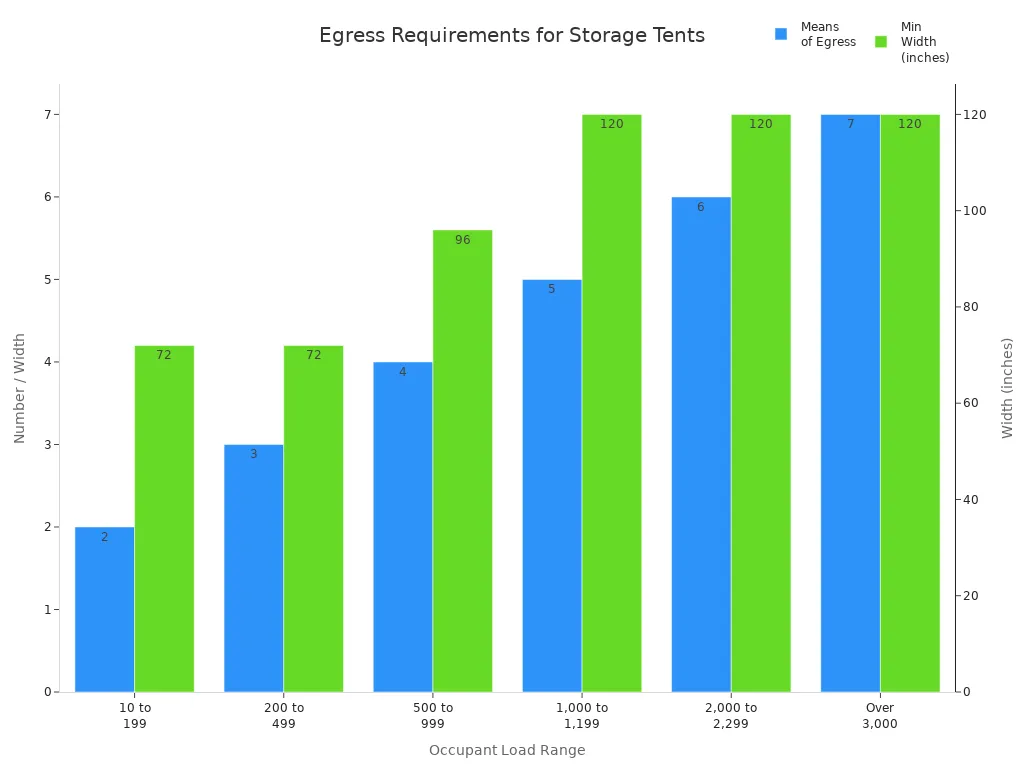
The table below shows the minimum number and width of exits based on occupant load:
| Occupant Load | Minimum Number of Means of Egress | Tent: Minimum Width of Each means of Egress (inches) |
|---|---|---|
| 10 to 199 | 2 | 72 |
| 200 to 499 | 3 | 72 |
| 500 to 999 | 4 | 96 |
| 1,000 to 1,199 | 5 | 120 |
| 2,000 to 2,299 | 6 | 120 |
| Over 3,000 | 7 | 120 |
Organizations should inspect emergency access features regularly. Proper signage and lighting improve safety during emergencies.
Callout: Safety compliance and structural stability protect people and assets. Always check certifications, engineering documents, and emergency access requirements before installing an industrial storage tent.
Key Features and Benefits Summary
Industrial warehouse tents deliver essential solutions for organizations that need reliable, flexible, and safe storage. This section provides a quick reference checklist and a clear overview of the key features and benefits that buyers should consider.
Feature Checklist
The following table highlights the most important features to evaluate when selecting an industrial storage tent:
| Feature | Description |
|---|---|
| Durability | Tents made from high-quality materials such as polyethylene or vinyl offer long-lasting protection. |
| Weather Protection | Strong weather resistance ensures stored items remain safe from rain, wind, and sunlight. |
| Flexibility | Modular designs and customizable options allow tents to adapt to changing needs and locations. |
| Safety | Compliance with safety standards, flame-retardant materials, and secure entry points protect people and assets. |
Tip: Buyers should use this checklist to compare industrial warehouse tents and avoid overlooking critical features.
Durability
Industrial warehouse tents use ripstop fabrics and reinforced seams to increase strength. Vinyl covers resist wear and tear, while polyethylene offers a lighter, cost-effective option. These materials help extend the lifespan of the tent and reduce maintenance needs.
Weather Protection
Weather resistance is vital for protecting stored goods. Tents with sealed seams, waterproof covers, and UV-resistant coatings keep items safe in all conditions. Flame-retardant standards, such as DIN 4102-1, further enhance safety during hot and dry weather.
Flexibility
Modular construction and made-to-measure solutions allow organizations to adjust tent size and layout as requirements change. Quick assembly and relocation features support dynamic operations and temporary storage needs.
Safety
Industrial warehouse tents must meet local safety regulations. Certified materials, secure entry systems, and emergency access features help prevent hazards. Regular inspections and compliance with standards such as B1 flame-retardant level ensure ongoing protection.
Benefits Overview
Organizations report several advantages when using industrial warehouse tents for storage and operations.
- Cost Savings
- Industrial warehouse tents provide a cost-effective alternative to permanent buildings. Options to buy or rent offer economic flexibility. Lower installation and maintenance costs help organizations manage budgets efficiently.- Operational Efficiency
- Quick setup and customizable layouts allow teams to respond rapidly to changing demands. Spacious interiors support free movement of people and equipment. Tents can be tailored for specific workflows, improving productivity.
| Benefit | Description |
|---|---|
| Customizable and spacious | Tents offer large open areas without obstructions, making it easy to move equipment and people. |
| Cost-effective | Lower costs compared to permanent structures, with flexible purchase or rental options. |
| Quick Shelter Solutions | Fast installation meets urgent space needs, supporting business continuity during unexpected events. |
Block Quote: Industrial warehouse tents help organizations seize opportunities and overcome obstacles quickly, maintaining smooth operations even during emergencies.
Buyers should use this summary as a guide when evaluating options. Focusing on key features and benefits ensures the chosen tent meets both current and future needs.
A high-quality industrial tent offers durability, safety, and adaptability for many storage needs. Buyers should review features of each industrial storage tent and check local regulations before making a decision. Industrial warehouse tents provide flexible solutions for changing environments. Experts help organizations select the best option for their operations.
MEISTER stands out as a trusted supplier for reliable industrial warehouse tents.
FAQ
What is the typical lifespan of an industrial storage tent?
Most industrial storage tents last between 6 and 15 years. Lifespan depends on material quality, maintenance, and exposure to harsh weather.
Can industrial tents be used year-round in extreme climates?
Manufacturers design many industrial tents for year-round use. Insulated walls, strong frames, and weatherproof covers help tents perform well in hot, cold, or wet conditions.
How do companies ensure tent safety during storms?
Teams secure tents with proper anchoring methods like stakes, concrete weights, or shipping containers. Regular inspections and certified materials improve safety during severe weather.
Are industrial storage tents customizable for different industries?
Manufacturers offer customization options for entryways, lighting, insulation, and security. Companies can request features that match their workflow and industry needs.
What certifications should buyers look for in industrial tents?
Buyers should check for CPAI-84, NFPA 701, and local building code compliance. Certified materials and engineering documents confirm safety and reliability.
How quickly can a team install an industrial storage tent?
Small tents may be ready in one day. Medium tents often take several days. Large or complex tents may require up to four weeks for full installation.
Do industrial tents require a foundation?
Most frame tents do not need a permanent foundation. Teams can install tents on concrete, grass, or asphalt. Temporary flooring solutions improve stability and safety.
What maintenance do industrial storage tents need?
Regular cleaning, inspections, and minor repairs extend tent life. Teams should check for tears, rust, and mildew. Annual anti-corrosion treatment helps steel frames last longer.