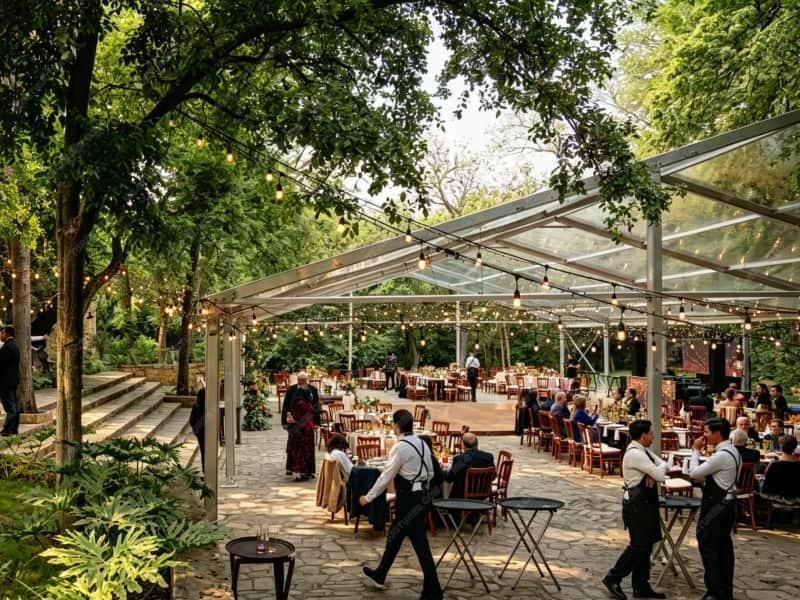


How Big A Tent Do I Need For My Wedding?Here's an Ultimate Guide!
 Jun 06, 2025|
 View:2379
Planning an outdoor wedding brings excitement and challenges in equal measure. One of the most critical decisions couples face is determining the appropriate tent size. A tent that's too small leaves guests cramped and uncomfortable, while an oversized tent wastes money and creates an empty atmosphere. This comprehensive guide breaks down everything needed to select the perfect wedding tent size, ensuring guests enjoy comfort while the celebration maintains its intended ambiance.
Key Takeaways
Standard calculation: 10-12 square feet per guest for seated dinners, 15-20 square feet with dance floor and buffet
A wedding tent for 100 guests typically requires 1,500-2,000 square feet
Consider additional space for band, DJ, bars, gift tables, and entrance areas
Weather contingencies and seasonal factors significantly impact tent selection
Venue terrain, accessibility, and permit requirements affect setup options
Understanding Basic Wedding Tent Size Requirements
The foundation of selecting an appropriate wedding tent size starts with understanding spatial requirements per guest. Event professionals use established formulas based on years of experience and guest comfort studies.
For a seated dinner arrangement, allocate approximately 10-12 square feet per person. This accounts for dining tables, chairs, and minimal walking space between tables. When adding a dance floor, increase this to 15 square feet per guest. If the wedding includes buffet stations, bars, or live entertainment, plan for 18-20 square feet per person to ensure comfortable movement throughout the event.
These calculations provide baseline figures, but individual weddings require customization based on specific elements and guest expectations. Wedding industry standards emphasize that adequate space allocation directly correlates with guest satisfaction and event flow.
Wedding Tent Size Chart by Guest Count
This reference table provides recommended tent dimensions based on common guest counts and typical wedding layouts. These figures assume round tables seating 8-10 guests, a dance floor, DJ or band area, and standard bar setup.
| Guest Count | Minimum Size (Seated Only) | Recommended Size (With Dance Floor) | Ideal Size (Full Setup) |
|---|---|---|---|
| 50 guests | 20' x 30' (600 sq ft) | 20' x 40' (800 sq ft) | 30' x 30' (900 sq ft) |
| 100 guests | 30' x 40' (1,200 sq ft) | 30' x 50' (1,500 sq ft) | 40' x 50' (2,000 sq ft) |
| 150 guests | 40' x 40' (1,600 sq ft) | 40' x 60' (2,400 sq ft) | 40' x 80' (3,200 sq ft) |
| 200 guests | 40' x 60' (2,400 sq ft) | 50' x 60' (3,000 sq ft) | 60' x 60' (3,600 sq ft) |
| 250 guests | 50' x 60' (3,000 sq ft) | 50' x 80' (4,000 sq ft) | 60' x 80' (4,800 sq ft) |
| 300 guests | 60' x 60' (3,600 sq ft) | 60' x 80' (4,800 sq ft) | 60' x 100' (6,000 sq ft) |
Note: These dimensions represent common tent sizes available from rental companies. Actual requirements may vary based on specific layout preferences and additional features.
Key Factors That Influence Wedding Tent Size Selection
Seating Arrangement Style
The chosen seating configuration dramatically impacts space requirements. Round tables typically seat 8-10 guests and require approximately 100-120 square feet per table including chairs and aisle space. Rectangular banquet tables accommodate more guests in less square footage but create a more formal atmosphere. For a wedding tent size for 50 guests using round tables, expect to need 5-6 tables plus additional space for other elements.
Some couples opt for a mix of seating styles, combining round tables for dining with lounge furniture areas for cocktail hour. This flexible approach requires careful planning but creates distinct zones within the tent that enhance guest experience.
Dance Floor and Entertainment Space
Dance floors typically require 3-4 square feet per guest who will dance. For a lively wedding where most guests participate, plan for a larger dance area. A 12' x 12' dance floor (144 square feet) accommodates about 35-48 dancers comfortably, suitable for smaller celebrations. A wedding tent for 100 guests benefits from a 16' x 16' to 20' x 20' dance floor.
Live bands need significantly more space than DJs. A four-piece band typically requires 150-200 square feet for equipment, instruments, and performance space, while a DJ setup needs approximately 80-120 square feet. These measurements must be added to the overall wedding tent size calculation.
Bar and Buffet Stations
Bar setups vary widely in size requirements. A standard 6-8 foot bar serves approximately 75-100 guests, with bartenders working from behind. Larger weddings benefit from multiple bar locations to reduce crowding and wait times. Each bar station requires 50-70 square feet including service area and guest approach space.
Buffet configurations need even more consideration. A single-sided buffet serving 150 guests requires approximately 150-200 square feet, while double-sided buffets offer better flow but need 200-250 square feet. According to public health event planning guidelines, proper buffet spacing significantly reduces congestion during meal service.
Entrance, Walkways, and Transition Spaces
Often overlooked, entrance areas and internal walkways require substantial space. Plan for a 5-8 foot wide main entrance to accommodate guests entering simultaneously. Internal aisles between table groupings should measure at least 3-4 feet wide, with main pathways to restrooms, bars, or dance floors reaching 5-6 feet.
Transition spaces between different functional areas prevent bottlenecks. The area between dining tables and the dance floor, for instance, needs sufficient room for guests to move comfortably as the evening progresses from dinner to dancing.

Calculating Wedding Tent Size for Specific Guest Counts
Wedding Tent for 150 Guests
A reception for 150 guests represents a mid-sized wedding requiring careful space planning. Using the 15 square feet per guest standard with a dance floor, the minimum requirement is 2,250 square feet. A 40' x 60' tent (2,400 square feet) provides adequate space for:
15-16 round tables seating 8-10 guests each
16' x 16' to 18' x 18' dance floor (256-324 square feet)
DJ or band setup (80-200 square feet)
Two bar stations (140 square feet combined)
Gift and guest book table (40 square feet)
Walkways and circulation space
For enhanced comfort and additional features like lounge seating or photo booth stations, upgrading to a 40' x 80' tent (3,200 square feet) provides substantial breathing room without feeling empty.
Wedding Tent for 200 Guests
Planning a wedding tent for 200 guests requires moving into larger tent categories. The baseline calculation of 3,000 square feet (15 sq ft per guest) fits within a 50' x 60' tent. Most event professionals recommend a 60' x 60' tent (3,600 square feet) for comprehensive setups.
This size accommodates 20-22 dining tables, a substantial 18' x 20' to 20' x 20' dance floor, live band equipment, multiple bar stations, and generous circulation space. The additional square footage proves invaluable as guest counts approach capacity, preventing the cramped feeling that can diminish guest experience.
Wedding Tent for 250 Guests and Beyond
Large-scale celebrations for 250-300 guests enter the realm of significant event planning. A wedding tent for 250 guests typically requires 3,750-4,000 square feet minimum, with 4,800 square feet being the comfortable standard. This translates to a 50' x 80' or 60' x 80' tent configuration.
For a wedding tent for 300 guests, professionals recommend 60' x 80' to 60' x 100' structures (4,800-6,000 square feet). These larger tents often incorporate multiple pole positions or clear-span designs that create expansive, column-free interiors. The scale allows for creative layout options including separate cocktail and dinner areas, multiple entertainment zones, and sophisticated lighting designs.
Weather Considerations and Seasonal Factors
Climate conditions significantly influence wedding tent size decisions. Summer weddings in warm regions benefit from larger tents that feel less stuffy, with good ventilation or climate control systems. Winter celebrations require enclosed tent structures with heating capabilities, and these environmental control systems occupy space that must be factored into overall dimensions.
Rain contingencies often drive couples to select larger tents. If the ceremony was planned outdoors but weather forces it under the tent, there must be sufficient space to accommodate additional seating rows. According to National Weather Service event safety guidelines, flexible space planning reduces stress when unexpected conditions arise.
Seasonal considerations extend to tent sidewalls. Open-air tents work beautifully in perfect weather but provide no protection. Tents with removable sidewalls offer flexibility, though enclosed configurations feel smaller than open ones of identical dimensions. When comparing tent options, evaluate them in their expected configuration for the wedding day.
Venue Terrain and Site Logistics
Ground conditions at the venue location affect tent selection and placement. Level, firm terrain supports almost any tent style and size. Sloped or uneven ground may require expensive leveling platforms or limit tent size options. Sandy or soft soil needs specialized anchoring systems that influence installation costs and setup time.
Overhead clearance matters as well. Trees, power lines, or building overhangs restrict where tents can be positioned and may limit height options. Peak-style tents need more overhead clearance than frame tents. Site surveys before finalizing tent rental agreements prevent last-minute complications.
Access for delivery trucks and installation equipment requires consideration. Rental companies need to transport tent materials, poles, stakes, and sometimes heavy equipment to the site. Narrow driveways, gated properties, or distant parking areas can complicate delivery and increase labor costs. Some venues have specific load-in and setup time restrictions that affect logistics.
Permit Requirements and Regulations
Many municipalities require permits for temporary structures including wedding tents, particularly for gatherings exceeding certain guest counts. Permit requirements typically depend on tent size, guest count, and whether the tent includes sidewalls. Regulations vary significantly by location, with some jurisdictions requiring fire marshal inspections for tents over specific square footage thresholds.
Fire safety codes often mandate specific exit widths and numbers based on occupancy. According to NFPA fire safety standards, tents accommodating more than 100 guests frequently must have multiple exits with minimum width requirements. Some jurisdictions require fire extinguishers at specific intervals or prohibit certain decorative materials inside tents. Consulting local authorities early in the planning process avoids complications and potential delays.
Budget Considerations for Wedding Tent Rentals
Tent rental costs escalate with size, but not always proportionally. A 40' x 60' tent might cost 30-50% more than a 30' x 40' tent, but provides 100% more space. Couples often find that upgrading to the next size category offers significant value when considering comfort and functionality improvements.
Additional expenses beyond basic tent rental include flooring, lighting, climate control, and delivery/installation. Flooring alone can add $2-6 per square foot to rental costs depending on the material chosen. Lighting packages range from basic string lights to sophisticated chandelier installations. Climate control systems for summer or winter weddings add substantial expense but prove essential for guest comfort.
Budget-conscious couples can reduce costs by selecting tents that fit their needs without excess space, choosing simpler tent styles like pole tents over clear-span structures, and limiting add-ons to essentials. However, undersizing the tent to save money often backfires when guests feel uncomfortable throughout the reception.
Working With Professional Tent Rental Companies
Experienced tent rental companies provide invaluable guidance beyond simply providing a tent structure. Quality vendors conduct site visits, assess terrain and access, recommend appropriate tent sizes based on detailed event plans, and handle permit applications when needed.
During consultations, share detailed information about guest count, desired layout, entertainment plans, and catering style. Request to see sample layouts or CAD drawings showing how elements fit within proposed tent dimensions. Many companies use specialized software to create accurate visualizations, helping couples understand spatial relationships before committing to specific sizes.
Verify what the rental price includes. Some quotes cover only the tent structure itself, while others include installation, takedown, sidewalls, and basic lighting. Understand cancellation policies, weather contingency plans, and what happens if conditions require last-minute changes to setup.
Common Mistakes to Avoid
The most frequent error couples make is underestimating space requirements to reduce costs. A tent filled to absolute capacity creates an uncomfortable, claustrophobic atmosphere. Guests struggle to navigate between tables, lines form at bars and buffets, and the dance floor becomes impossibly crowded.
Another common mistake involves failing to account for all necessary elements. Couples calculate space for dining tables and dance floor but forget to include adequate room for the band, bars, gift table, and circulation. These oversights force last-minute compromises that diminish the celebration.
Ignoring site conditions leads to complications. Couples envision large tents without verifying that their chosen venue location can accommodate them. Discovering space constraints, overhead obstacles, or access limitations weeks before the wedding creates unnecessary stress and forces rushed alternative planning.
Final Recommendations
Selecting the appropriate wedding tent size requires balancing practical space requirements with budget considerations and venue constraints. Starting with the basic formula of 15-20 square feet per guest provides a solid foundation, then adjusting based on specific event elements ensures adequate space.
When caught between two tent sizes, choosing the larger option almost always proves worthwhile. The additional space enhances guest comfort, allows for better flow throughout the event, and provides flexibility if plans evolve. Extra space never feels wasted once guests arrive and the celebration begins.
Consulting with experienced tent rental professionals early in the planning process saves time, money, and stress. Their expertise helps navigate the complexities of site evaluation, permit requirements, and spatial planning, ensuring the chosen tent size creates the perfect setting for a memorable celebration.
Frequently Asked Questions
How much space does each guest need under a wedding tent?
For seated dining only, allocate 10-12 square feet per guest. With a dance floor included, increase to 15 square feet per person. Full-service receptions with buffets, bars, and entertainment require 18-20 square feet per guest for comfortable movement and adequate spacing.
Should couples rent a larger tent than calculations suggest?
Yes, when budget allows, selecting the next size up from minimum calculations provides substantial benefits. Extra space improves guest comfort, enhances traffic flow, and accommodates unexpected additions like last-minute RSVPs or weather contingencies requiring ceremony relocation under the tent.
What happens if final guest count changes after tent rental is confirmed?
Most rental companies allow adjustments within certain timeframes, typically 2-4 weeks before the event. Decreasing guest counts usually permits switching to smaller tents without penalty. Increasing guest counts may require upgrading to larger tents if available, though this could incur additional fees. Communicate changes promptly to ensure availability.
Do tent shapes affect space requirements?
Yes, tent geometry impacts usable space. Pole tents have center poles and perimeter poles that occupy floor space and affect layout options. Frame tents and clear-span structures provide column-free interiors with maximum usable square footage. Irregular shapes like hexagons or ovals can create wasted corners but offer unique aesthetic appeal.
How far in advance should couples book wedding tents?
Popular wedding dates, especially during peak season (May through October in most regions), book up 9-12 months in advance. Off-season dates offer more flexibility with 4-6 months' notice typically sufficient. Large or specialized tents require longer lead times due to limited inventory availability.
Can multiple smaller tents replace one large tent?
While possible, multiple tents typically cost more than single large structures and create logistical challenges. Separate tents work well for distinct functions like cocktail hour and reception, but require guests to move between structures. Consider climate, as moving between tents in rain or extreme temperatures impacts guest experience negatively.
What additional equipment affects tent size needs?
Photo booths require 80-100 square feet, including queuing space. Dessert or coffee stations need 60-80 square feet each. Lounge furniture groupings use 150-200 square feet per seating area. Charging stations, guest book tables, and favor displays each require 20-40 square feet. Plan for these elements when calculating total wedding tent size requirements.